How MFT Detects and Responds to Security Threats
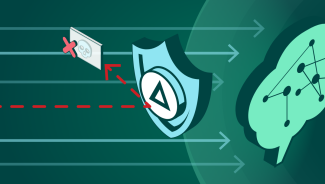
File transfer platforms are designed to accept connections, authenticate users and systems, and move data reliably at scale. They typically operate in such a way that users in most organizations forget they even exist as they run so smoothly. That same reliable functionality also makes them a consistent target for scanning, credential abuse, and automated probing, often long before anyone notices something is wrong.
In some Managed File Transfer (MFT) environments, security issues are rarely single, obvious events. Instead, they appear as patterns over time: repeated access attempts, unusual connection behavior, transfers that don’t quite follow the normal path. Detecting those signals early and responding in a way that doesn’t disrupt operations is where MFT security actually succeeds or fails.
This is where modern platforms are focusing their efforts: recognizing developing risks and handling them proactively not just securing data.
Detection Happens at the Connection Level
“In many legacy setups, threat detection begins only after authentication, or worse, after a transfer fails. By that point, the system has already spent time processing the request, and security teams are left reacting to the situation instead of preventing it,” said Jacob Bernal, Solutions Engineer, Fortra MFT.
Globalscape EFT, a modern, enterprise-level MFT platform, evaluates incoming connections as they arrive, before sessions are fully established. This early inspection allows the platform to proactively identify low-reputation or suspicious sources or IPs without involving credentials, workflows, or backend systems.
This unique approach doesn’t rely on dramatic alerts or create exhaustive false positives creating alert fatigue. Instead, it quietly reduces exposure by keeping risky traffic from entering the environment in the first place.
And that should come as a big relief to security teams. According to the Pulse of the AI SOC Report from Cybersecurity Insiders, 76% of SOCs call out alert volume and false positives as their top challenges, while 64% report relying heavily on manual triage and investigation. This combination is an obvious path to team stress and delayed response.
Read More: Stop Bad IPs Continuously with Globalscape’s Threat Brain Integration
Trust Is Continuously Reevaluated, Not Assumed
Static trust models are common in file transfer environments, but they don’t hold up well in practice. An IP address or partner endpoint that was perfectly safe last month may not be so safe today. Attackers rotate infrastructure constantly, and reused credentials are a recurring problem.
“Globalscape EFT avoids risky long-lived trust decisions by reassessing risk with each new session. Instead of simply assuming prior approval still applies, the platform checks whether a connection still meets current security expectations,” added Bernal.
For administrators, this means fewer time-consuming manual updates and fewer decisions based on outdated assumptions. Instead, security adapts quietly as the environmental conditions change.
Architecture Limits What Attackers Can Reach
Detection alone doesn’t reduce risk if a successful connection immediately exposes internal systems.
That’s why Globalscape uses a DMZ Gateway architecture to keep externally facing services separated from internal processing. Connections are proxied through the DMZ, and sensitive data does not persist there. This separation effectively limits lateral movement in the MFT environment and reduces the eventual impact of suspicious or unwanted activity.
When something needs to be contained, the ability to respond is simplified because access paths are intentionally narrow and controlled.
Signals Turn Into Action Automatically
Identifying suspicious behavior is obviously useful. However, acting on it consistently is what makes a difference day to day for IT teams trying to secure the sensitive data entrusted to organizations.
Event-driven automation can respond to conditions such as repeated authentication failures, unexpected workflow behavior, or even policy violations. Depending on how the system is configured, responses can include retries, connection restrictions, alerts, or workflow controls.
These actions do not replace essential human oversight. They do however, handle routine decisions the same way every time, which in turn, helps teams avoid both overreaction and missed issues.
Visibility Is Built for Investigation, Not Just Storage
As expected, in most organizations MFT environments generate a large volume of activity. Without context, the activity logs for all the actions taken become noise.
Centralized event data and support for logging formats designed to integrate with SIEM and monitoring platforms, are needed to turn down the volume of all that noise. That allows security and operations teams to correlate file transfer activity with identity, network, and system signals instead of treating MFT as a standalone system.
When an investigation is needed, the information is already there in the structured, consistent, and usable form needed for visibility.
Fewer Alerts, Better Focus
High-volume file transfer environments are especially vulnerable to alert fatigue. Static rules often generate notifications that require review but rarely indicate meaningful risk.
By identifying clearly suspicious connections early and adding context to events that do move forward, a detection and response model helps reduce unnecessary alerts without sacrificing auditability. Teams spend less time sorting through false positives and more time addressing real issues.
This balance matters in environments where reliability and uptime are just as critical as security.
Detection and Response Support Compliance by Default
Regulatory requirements expect organizations to show how access is controlled, how activity is monitored, and how issues are handled, not just that data is encrypted.
Early detection, consistent response, and auditable logging all contribute to that outcome. When these capabilities are part of an enterprise’s normal operations, compliance becomes easier to demonstrate and far less disruptive to maintain.
A robust MFT platform should support these requirements without introducing additional tools or parallel processes.
Security Works Best as a System
Bernal notes, “In MFT environments, security isn’t simply defined by a single control or feature. Rather, file security is the result of how the layered combination of early detection, purposeful architecture, automation, and visibility all work together under everyday conditions, whether those are run-of-the-mill file transfers, or large-volume exchanges of highly sensitive data.
“For teams evaluating or modernizing their file transfer platform, the most important question isn’t whether threats can be detected in theory, but how early detection happens and how smoothly the system responds when it does.”
That’s what turns MFT security into something operational teams can rely on, not just a security-centric document.